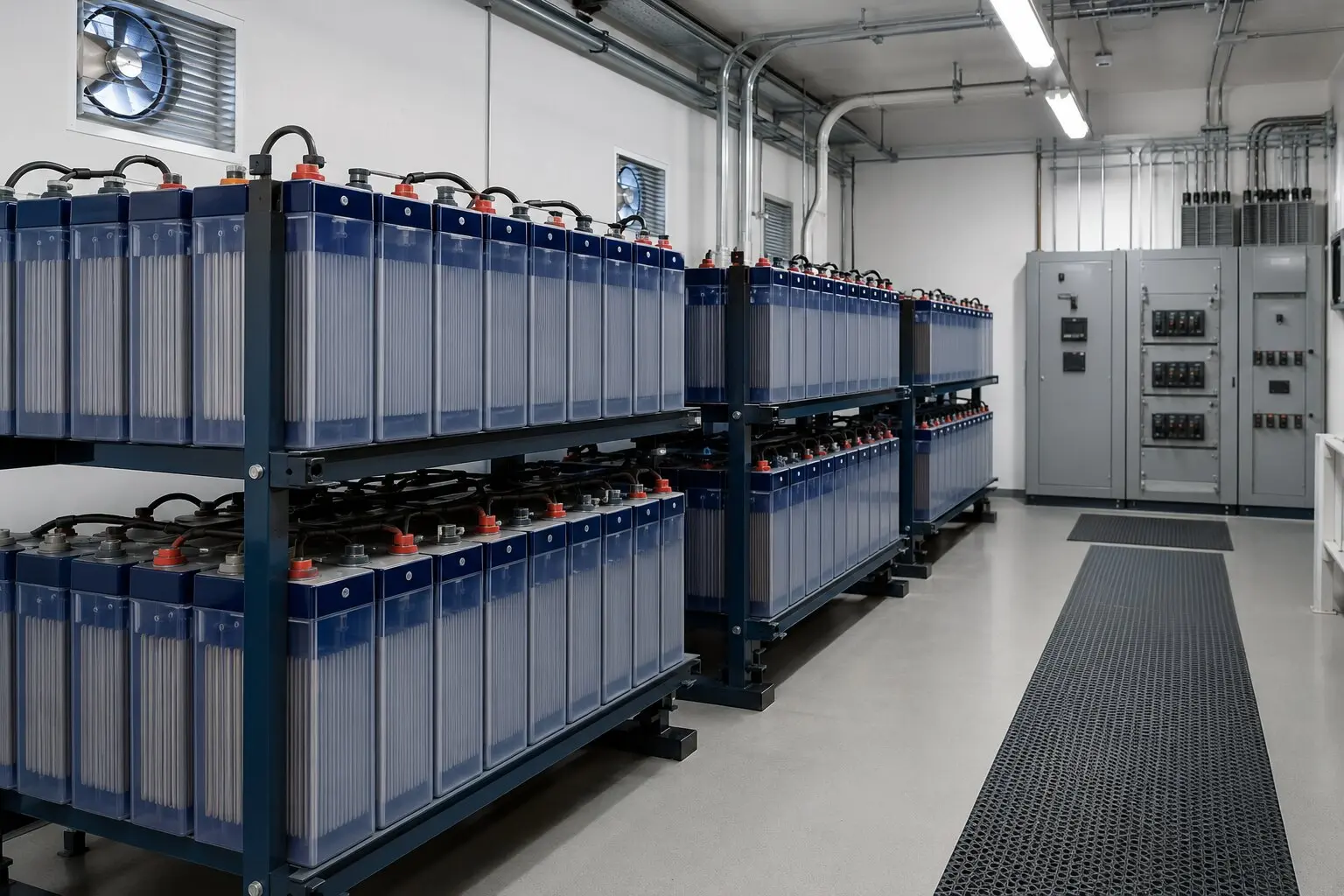
Ni-Cd Batteries

Nickel-cadmium batteries are sized to the duty profile in stationary and mobile applications where high reliability, deep-discharge resilience and demanding environmental conditions take priority.

Ni-Cd Aküler için ürün ve uygulama imagei

Ni-Cd PRODUCT SERIES

ALCAD and SAFT solutions for the application.

Explore ALCAD series for industrial standby power in fixed installations and SAFT series for railway duties.

ALCAD Ni-Cd products SAFT railway batteries Ni-Cd battery service

PRODUCT AND TECHNOLOGY

Role in the system and operating principle

01

Product description

A cell-based industrial battery system using nickel-cadmium electrochemistry for long service life, wide temperature ranges and demanding duty profiles.

02

Operating principle

Positive and negative electrodes store and release energy through ion exchange in the electrolyte. Cell selection depends on discharge current, duration and end voltage as well as Ah capacity.

03

Maintenance and lifecycle

Electrolyte levels, connections, cell voltages, temperature and capacity trends are recorded. Maintenance intervals depend on product type and operating conditions.

APPLICATIONS

Engineering for the duty profile.

TYPICAL OPTIONS

Technical framework confirmed in the quotation

Values and options are for initial selection. Final values are determined after the selected product, manufacturer data, specification and site conditions have been verified.

ParameterTypical optionSelection basis
Cell countAccording to system voltageAccording to minimum/maximum load voltage
CapacityAhAccording to the duty profile
Discharge durationSeconds to hoursAccording to load steps
TemperatureDesign rangeAccording to site conditions
Charging regimeFloat / boost chargingAccording to manufacturer data

SYSTEM ARCHITECTURE

Topology, protection and control

Topology and redundancy

  • Single or parallel battery strings
  • Separate or shared charging system
  • Rack, cabinet or custom installation
  • Central water-filling and monitoring options

Protection features

  • String fuse or DC breaker
  • Polarity and short-circuit safety
  • Ventilation and access measures
  • Temperature and cell-voltage monitoring option

Control and communication

  • Coordination of float/boost charging with the charger
  • String and cell-voltage monitoring
  • Electrolyte-level maintenance tracking
  • SCADA alarm reporting option

Options

  • Central water-filling system
  • Cell monitoring
  • Seismic rack
  • Battery breaker and distribution
  • Maintenance accessories

COMPARISON

Compare battery technologies by application

TechnologyPrincipal application strengthCritical selection checks
Ni-CdDemanding temperatures, long service and high reliabilityDuty profile, end voltage and manufacturer discharge tables
Lead-acidEstablished UPS/DC infrastructure and a range of cost optionsTemperature, autonomy, discharge power and expected life
Li-ionHigh energy density, cycling and advanced BMSChemistry, BMS/UPS compatibility, thermal and fire-safety approach
Na-ionEmerging stationary storage and pilot applicationsActual product data, references, maturity and supply assurance

PROJECT INPUTS

Information for the right selection

Unknown values can be clarified through site inspection and engineering before quotation.

  1. 01

    Time-stepped load profile

  2. 02

    Minimum/maximum system voltage limits

  3. 03

    Autonomy, end voltage and temperature

  4. 04

    Expected service and maintenance conditions

  5. 05

    Rack, room, ventilation and seismic requirements

TECHNICAL QUESTIONS

Frequently asked questions

Is capacity selected using Ah alone?

No. The duration of each load step, end voltage and temperature affect capacity.

Is maintenance required?

Inspection intervals depend on technology and product type. Visual checks, connection checks and electrical measurements should be planned.