Open Battery Racks
An open structure for installations prioritising visible batteries, connections and maintenance access.
Accessible layout Request a quoteTR
An orderly installation, maintenance access and project-appropriate mechanical structure for your batteries.
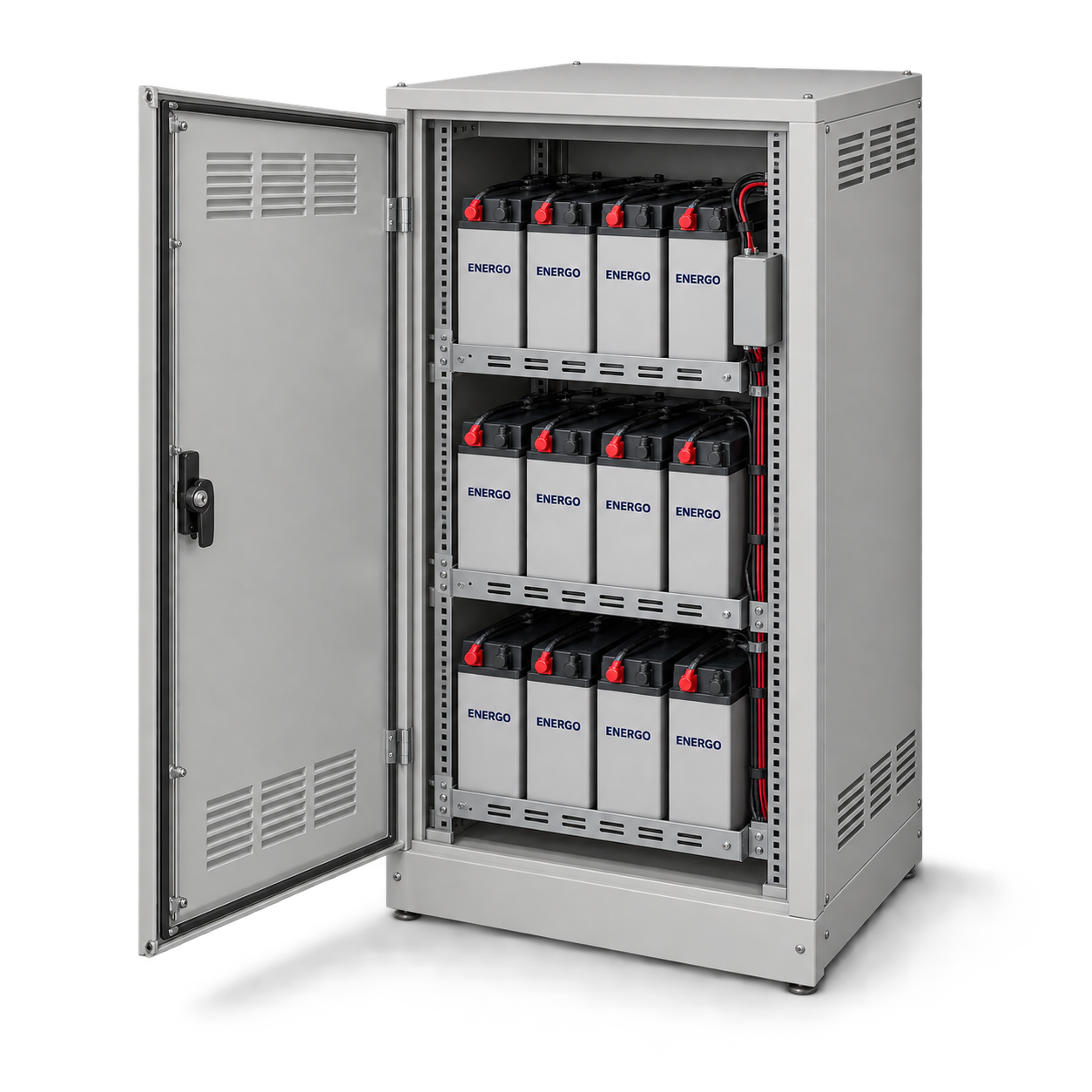
Cabinets with a 19-inch mounting arrangement for backup batteries in telecom and communications systems. Battery layout, cabling, maintenance access and ventilation are planned together for the project.
Product details →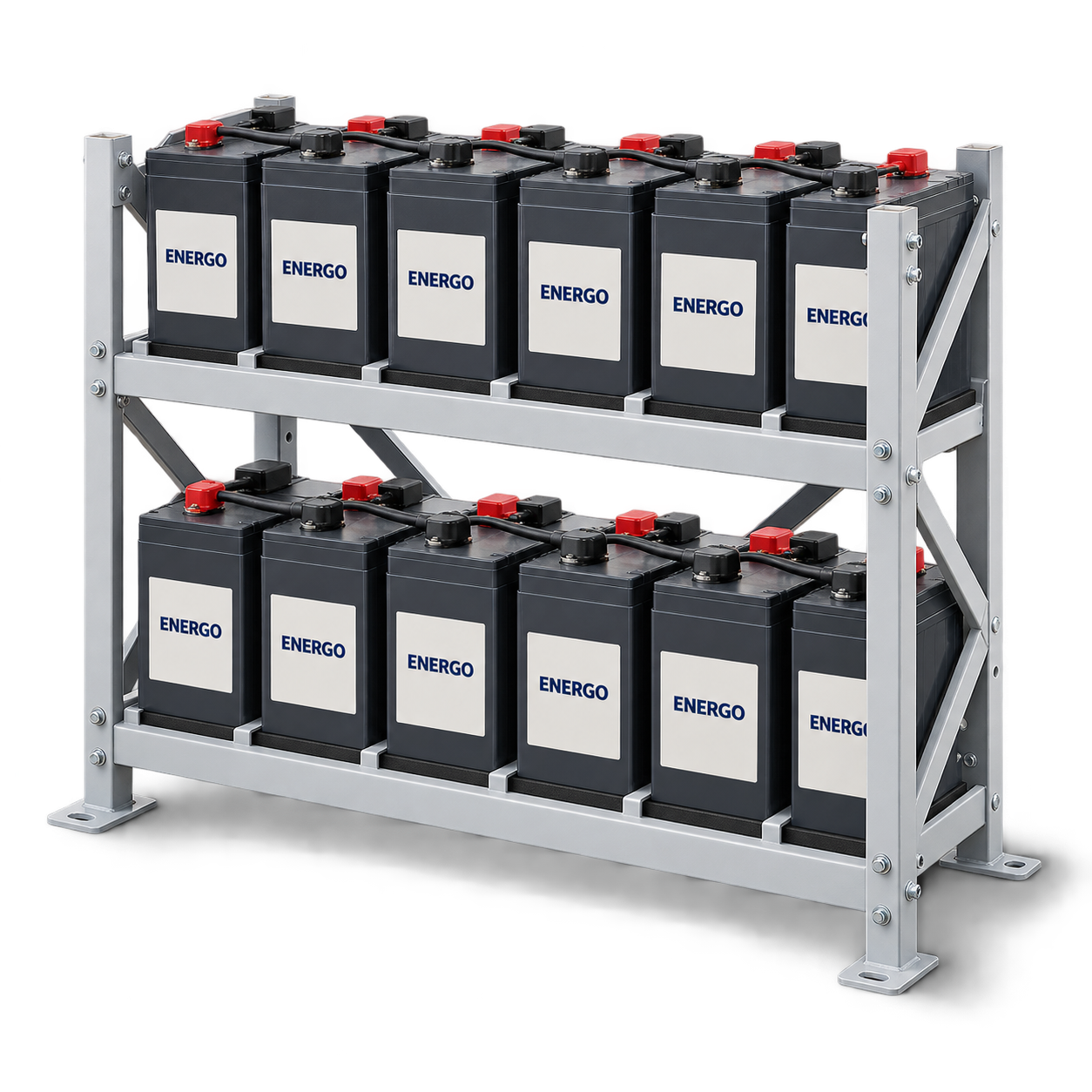
Open racks for orderly battery installation in UPS, rectifier and DC power systems. Structures planned around battery dimensions, count and weight provide convenient access for installation, connection checks and maintenance.
Product details →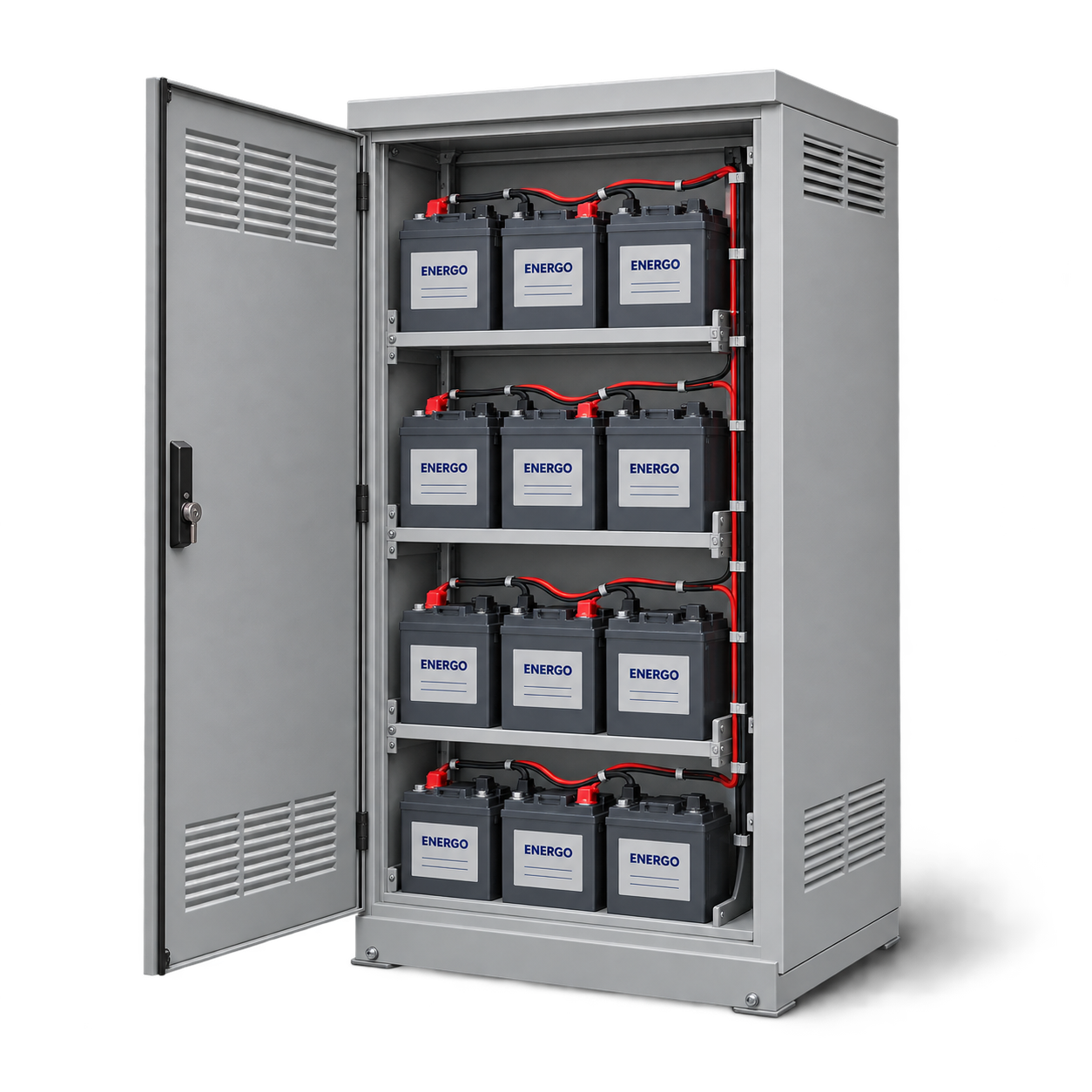
Indoor Battery Cabinets provide enclosed, orderly installation of battery banks in UPS and DC power systems. Solutions planned around battery dimensions, system capacity and installation space address maintenance access, cable organisation and ventilation together.
Product details →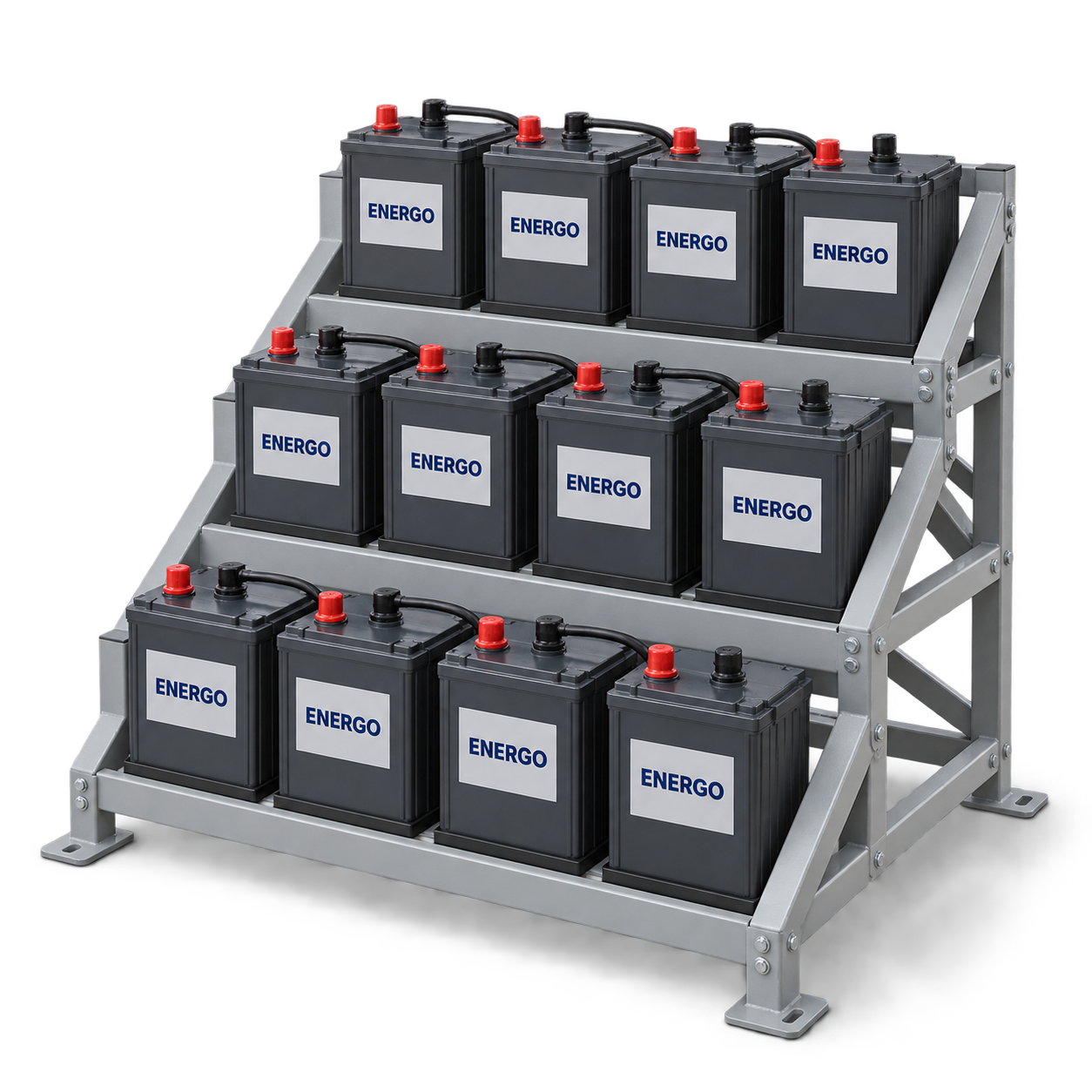
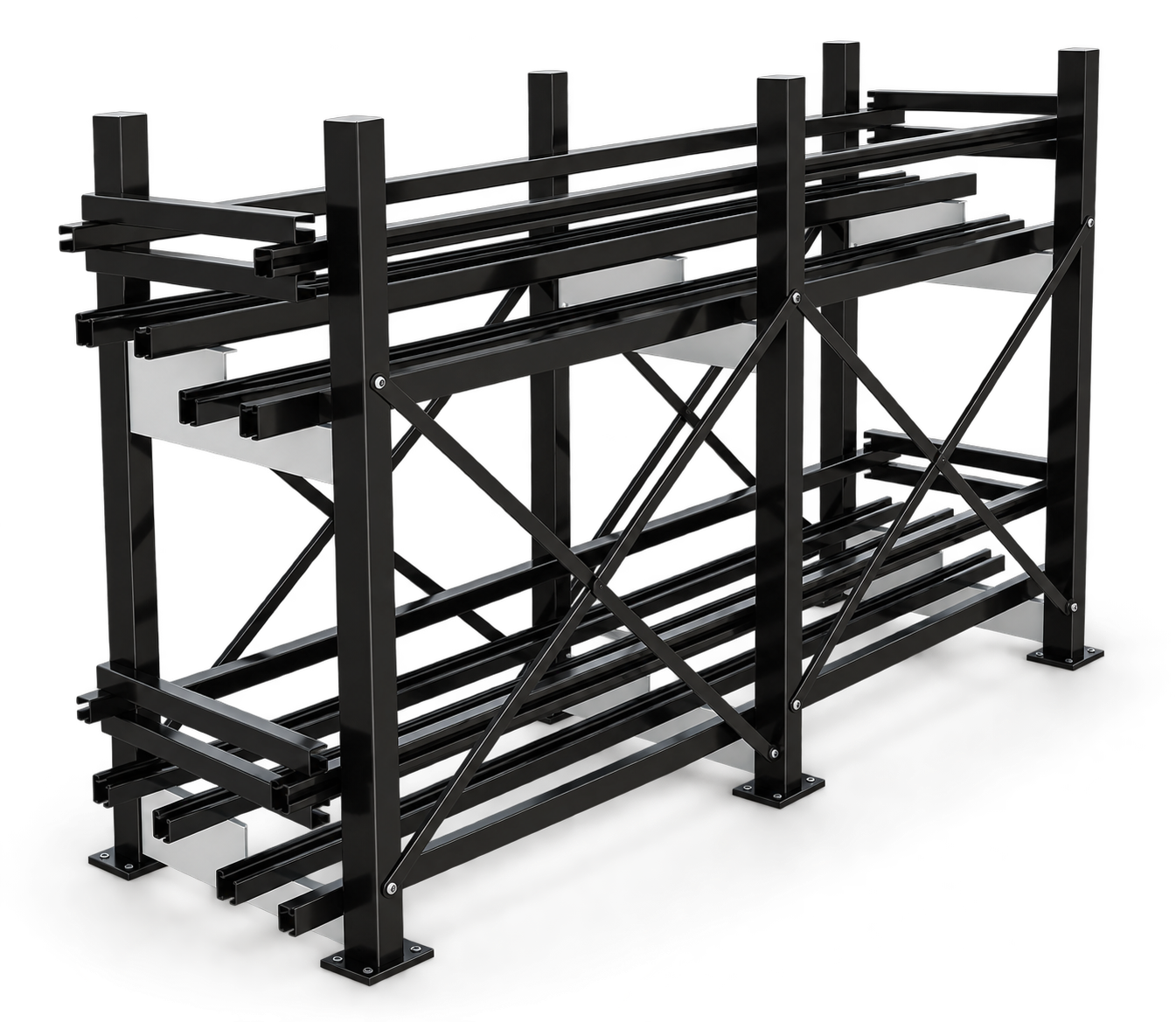
Racks place battery rows on steps rising from front to rear. The stepped arrangement supports inspection and maintenance by improving access to battery tops and connection points.
Product details →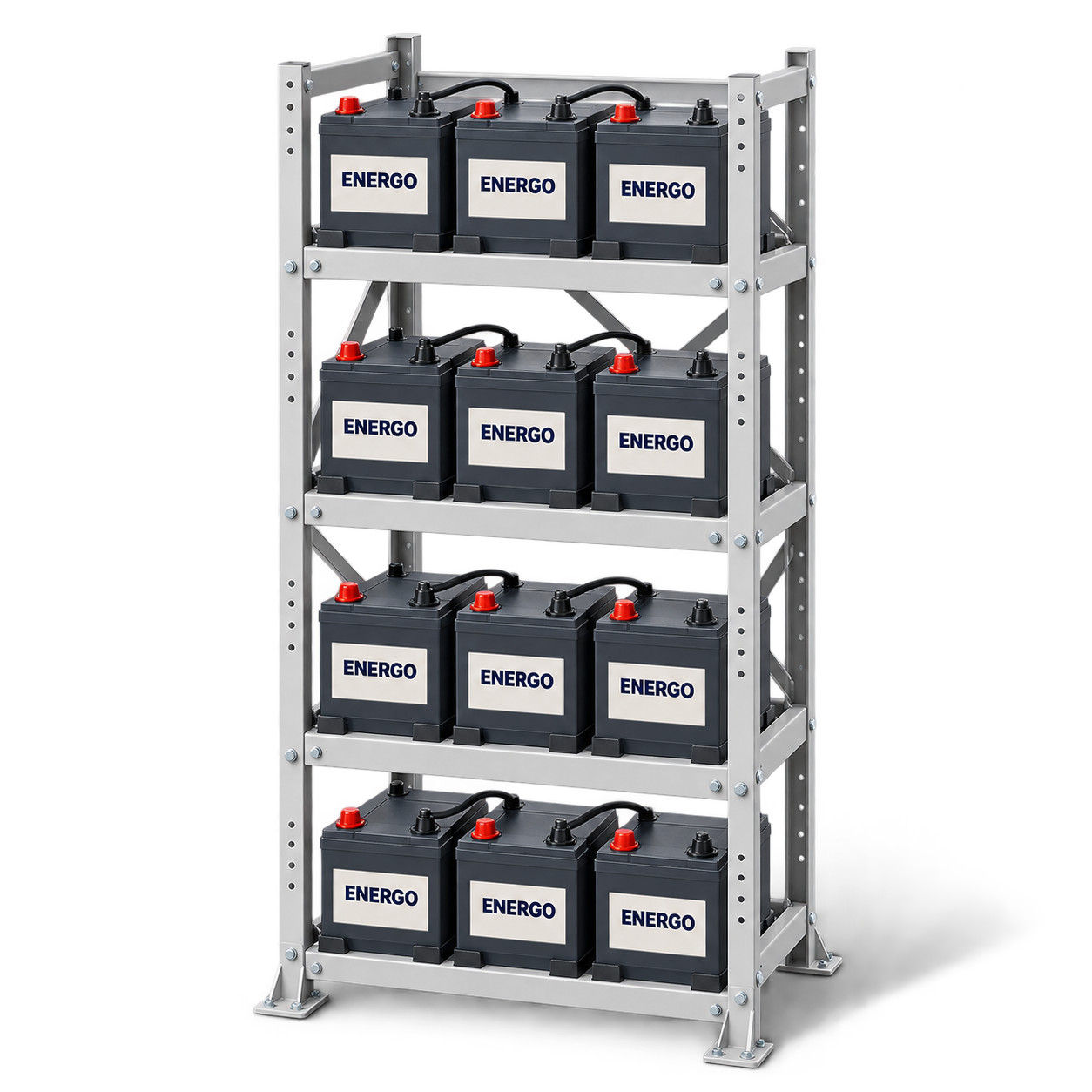
Multi-tier racks provide vertical battery installation where floor space is limited. A compact structure planned around battery dimensions and weight supports orderly UPS and DC power installations.
Product details →BATTERY INSTALLATION SOLUTIONS
Battery installation in UPS, rectifier and DC power systems must be planned with space, connections and maintenance access. EKA System supports rack and cabinet selection according to battery type, dimensions, cell or block count and site conditions.
External dimensions alone are insufficient for rack or cabinet selection. Total battery weight, connections, cable routes and maintenance clearances must be assessed together.
VRLA lead-acid and Ni-Cd installations follow battery manufacturer recommendations and maintenance requirements. Rack tiers and battery rows use available space efficiently while providing inspection and service access.
PRODUCT TYPES
From open and stepped racks to compact arrangements, indoor cabinets and custom dimensions, the structure is selected according to project requirements.
An open structure for installations prioritising visible batteries, connections and maintenance access.
Accessible layoutA stepped arrangement supporting access to connections and maintenance points.
Stepped arrangementA multi-tier layout for projects with limited floor space, planned around battery dimensions and service clearances.
Space utilisationAn enclosed cabinet with application-specific cable entries and ventilation.
Enclosed structureA cabinet for compatible battery trays or rack modules, selected after verifying mounting dimensions and load capacity.
Telecom installationSolutions assessed against available space and battery layout where standard dimensions are insufficient.
Project-specific dimensionsSELECTION CRITERIA
Racks and cabinets are selected by assessing manufacturer installation requirements together with mechanical and electrical project conditions.
| Parameter | Assessment | Selection basis |
|---|---|---|
| Battery layout | Open, stepped, multi-tier or cabinet | Battery dimensions and available space |
| Load capacity | Load per tier and total load | Battery weight and installation arrangement |
| Maintenance access | Terminal, connection and service clearances | Battery type and maintenance requirements |
| Material and finish | Structure suited to environmental conditions | Corrosion and electrolyte conditions |
| Fixing | Floor connections and required anchors | Floor, structure and project loads |
| Ventilation and protection | Arrangement appropriate to battery technology | Indoor/outdoor and temperature conditions |
PROJECT CONFIGURATION
Rack tier and row count, enclosure dimensions, cable entries and access direction are assessed against available space.
Surface finish and floor fixing are determined by site conditions. Supporting structures and anchors are separately verified for projects with seismic loads.
Cabinet ventilation, temperature management and required protection are assessed with the battery technology.
Space for battery monitoring sensors, connection guards, isolators and DC protection devices can be included in the layout.
FOR YOUR PROJECT
Share the battery model, cell or block count and available-space dimensions. Together we can assess a suitable rack or cabinet for the project.
Request a Quote for Your ProjectBattery brand and model, quantity, dimensions and weight
Available space and maintenance-aisle dimensions
Terminal direction, cable routes and connections
Mounting floor and any seismic-load requirements
Indoor/outdoor conditions, finish and ventilation requirements
TECHNICAL QUESTIONS
Selection depends on access, space, contact protection and environmental conditions. Cabinet ventilation and maintenance access require separate assessment.
Battery dimensions, total weight, terminals and maintenance clearances must suit the rack. VRLA and Ni-Cd compatibility is checked against manufacturer installation recommendations.
The 19-inch dimension alone is insufficient. Battery or module dimensions, trays, load capacity, connection access and ventilation must be verified together.
Battery model and quantity, dimensions and weight, available space, mounting conditions and maintenance access are needed to assess the installation.