 Request a quoteTR
Na-Ion Batteries
Explore energy storage options with sodium-ion technology. Assess cell chemistry, power and energy requirements, BMS and equipment compatibility together to select a suitable system for your project.
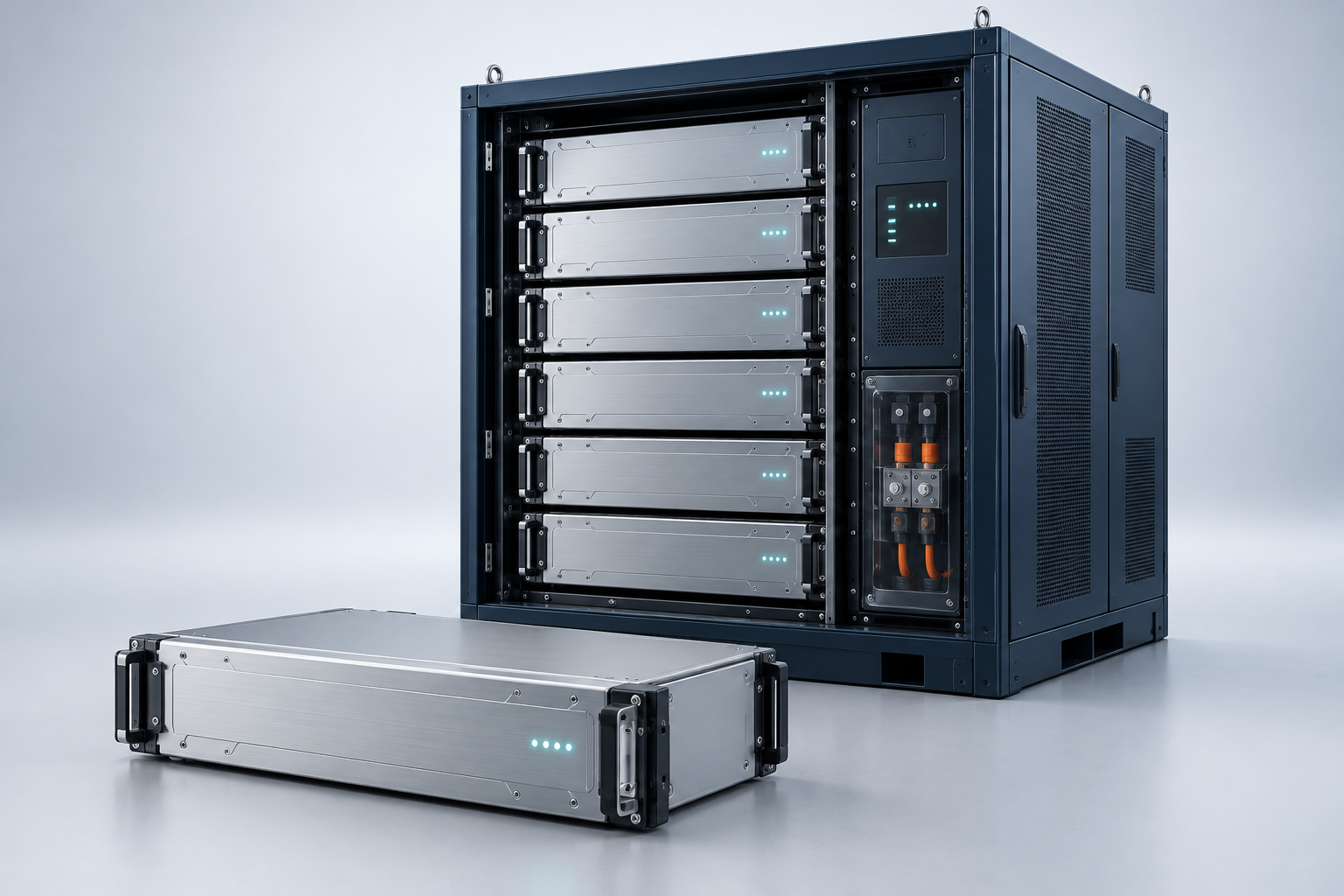
What is a Na-Ion battery and how does it work?
Sodium-ion batteries are rechargeable systems that store energy electrochemically. During charging and discharging, sodium ions move between the electrodes while electrons flow through the external circuit. Cells are assembled into modules to achieve the required voltage and capacity; modules, protection, monitoring and connections form the battery part of the system.
Na-Ion does not describe a single product or cell chemistry. Electrode materials, electrolyte, cell format and system design can differ. Fast charging, high cycle life or low-temperature performance offered by one manufacturer cannot automatically be applied to another sodium-ion battery. Technical selection is based on the specific product data.
One attraction is the abundance of sodium resources and the potential to diversify raw materials for energy storage. However, the cost from cell to installed system depends on production scale, electronics, power conversion, installation and service conditions. A raw-material advantage alone does not establish a lower project cost.
One technology family, different performance goals
Prussian blue and related structures
Open crystal structures in this electrode family provide pathways for sodium-ion movement. Some products are developed specifically for high-power applications with frequent cycling. Usable energy, charging time and cycle life must be assessed alongside the test conditions for the particular cell.
Layered oxides
Layered-oxide cathodes are another material family considered in sodium-ion technology. Composition and cell design affect energy density, voltage, stability and operating limits. A chemistry name alone does not define system performance.
Polyanionic structures
Different polyanionic cathode structures, including phosphate-containing materials, may also be used. The aim is an application-appropriate balance of stability, power and energy. On the anode side, materials such as hard carbon are assessed according to the selected cell architecture.
Assess advantages and limitations together
- Resource diversity: Sodium-based solutions can create alternative material and supply options for energy storage. The other components of the selected product require separate assessment.
- Power- or energy-focused design: Some products prioritise short-duration high power, while others prioritise longer-duration energy storage. Check kW and kWh ratings separately.
- Temperature performance: Some cells may offer advantages at low temperatures. Check the datasheet because charging and discharging temperature ranges can differ.
- Space and weight: Energy density varies between products. Plan cabinet numbers, floor loads and service space using the actual system dimensions.
Na-Ion selection involves more than cell characteristics. Local service, replacement-module availability, warranty coverage and application references also matter. For new products, distinguish production and delivery plans from performance already verified in the field.
Energy storage suited to the duty profile
Stationary energy storage: An option for planned energy use at facilities where generation and consumption occur at different times. Target duration, daily cycling and system efficiency are key sizing inputs.
Renewable energy and microgrids: An option for managing solar or wind generation, balancing local consumption and providing backup where the design supports it. Power conversion and control are selected for the intended grid operating mode.
UPS and telecom backup: Products developed for these applications may be assessed for short-duration high power or critical-load support. Not every Na-Ion battery works with an existing UPS; check the manufacturers’ compatibility and approval requirements.
Pilot projects: An instrumented pilot can help assess a new system against the actual load profile. Define success criteria in advance for usable energy, alarm behaviour, temperature, efficiency and service requirements.
Protection and monitoring from cell to system
The battery management system (BMS) monitors the condition of cells and modules. Voltage, temperature and current measurements track operation against the product’s defined limits. The scope of balancing, state-of-charge (SOC) and state-of-health (SOH) calculations depends on the manufacturer and cell model.
Communication between the BMS and power converter, charger or UPS may be necessary for correct system behaviour. Verify permitted charging and discharging conditions, alarms and controlled shutdown together. Sharing a protocol name does not establish compatibility across all device functions.
Fuses, contactors, emergency isolation, electrical insulation and thermal management are other parts of system design. Sodium-ion batteries should not generally be assumed to be risk-free or completely non-flammable. Assess the selected cell and system test reports, protection approach and facility emergency plan together.
Check power, energy and duration separately
kW describes instantaneous power; kWh describes stored or consumed energy. An Ah rating without voltage is insufficient to compare the energy capacities of different systems. Assess whether the load is constant or variable, and consider short power peaks alongside the energy calculation.
Actual selection accounts for conversion losses, usable state-of-charge range, temperature effects and expected capacity at end of life. The system must also meet the load power across its entire voltage range. Review manufacturer discharge data, permitted currents and recharge time together.
Can it operate with an existing system?
A Na-Ion battery is not an automatic replacement for an existing lead-acid or Li-Ion battery. Verify the DC voltage range, charging profile, current limits and required BMS communication with the relevant equipment. In particular, voltage changes during discharge must remain compatible with the converter’s operating window.
At quotation stage, share the equipment brand, model and, where necessary, software version with the manufacturer. Include alarm transmission, outage behaviour, restart and protection coordination in the commissioning plan. Check manufacturer approval and warranty conditions before connection or conversion.
From installation layout to the service plan
Qualified teams must install the system according to manufacturer instructions. Establish cabinet dimensions, floor load capacity, service access, ambient temperature and cable routes in advance. Assess cooling requirements against system heat losses and actual operating conditions.
At commissioning, check connections, communication, alarm transmission and protection behaviour. During operation, monitor temperature trends, cell differences, alarm history and performance records. Set maintenance intervals using manufacturer recommendations and the facility operating plan.
Life depends on calendar age, cycle count, temperature, depth of discharge and power profile. Warranty duration and design life are different concepts. Plan replacement modules, software support, transport and end-of-life arrangements at procurement stage.
Choosing Na-Ion, Li-Ion or lead-acid
| Criterion | Na-Ion | Li-Ion | Lead-acid |
|---|---|---|---|
| Product design | Different cell chemistries; power or energy focus varies by model. | Different chemistries, including LFP and NMC, and application options. | Established UPS and DC applications with different designs. |
| Space and weight | Assess the actual dimensions of the selected system. | Can offer compact solutions; depends on chemistry and design. | Layout requirements depend on capacity and discharge duration. |
| Equipment compatibility | Verify voltage window, BMS and charging compatibility. | Check BMS, charging profile and manufacturer approval. | Verify voltage and charging conditions for the battery type. |
| Lifecycle | Review product references, warranty and continuity of supply. | Review operating conditions, service and end-of-life capacity. | Assess temperature, maintenance and replacement planning. |
This comparison is a general selection framework; final performance and cost depend on the selected product data.
Questions about Na-Ion batteries
Are Na-Ion and sodium-sulphur batteries the same?
No. These are different electrochemical technologies. Sodium-sulphur operating conditions and architecture must not be generalised to Na-Ion products.
Are sodium-ion batteries commercially available?
Commercial products and applications exist, but availability, production scale and field experience vary by manufacturer and model. Verify current delivery and service conditions separately.
Are Na-Ion batteries non-flammable?
This cannot be guaranteed for all Na-Ion products. Assess safety using the cell chemistry, electrolyte, system design and test results.
Are they cheaper than Li-Ion batteries?
Not in every project. Compare cabinets, BMS, power electronics, installation, maintenance and replacement costs alongside the cell price.
Can they operate in cold environments?
This may be possible with suitable products. Check charging and discharging temperature limits separately, along with required cooling or heating and low-temperature power ratings.
Will they work with any UPS or inverter?
No. Manufacturers must verify voltage, charging, current, communication and protection compatibility.
How many years or cycles do they last?
No single value applies to all products. Review manufacturer data alongside test temperature, depth of discharge, power and the end-of-life capacity criterion.
Can capacity be expanded later?
This may be possible with modular products, subject to manufacturer expansion rules, module age differences, BMS and converter limits.
What information is needed for a quotation?
Load power, target duration, daily cycling, equipment details, ambient temperature, layout and communication requirements provide the initial assessment framework.
Technical selection and quotation for Na-Ion batteries
Share your load profile and operating conditions with EKA System. We can assess a suitable technology and system requirements for your project together.
- Load power, target duration and daily cycling requirements
- UPS / inverter model and DC operating voltage
- Ambient temperature, available space and installation conditions
- Communication, service, warranty and expansion expectations
Explore other battery technologies
General information does not guarantee product performance or availability; the technical datasheet and manufacturer instructions take precedence.