Product description
A panel system providing safe, selective, measurable and monitored distribution from AC and DC sources to critical loads, combining protection, transfer, isolation and maintenance functions according to the project.
 Request a quoteTR
AC and DC distribution panels deliver power safely from mains, UPS, generators, rectifiers and batteries to critical loads. Protection, isolation, measurement, alarms, transfer and maintenance are addressed within one project approach.
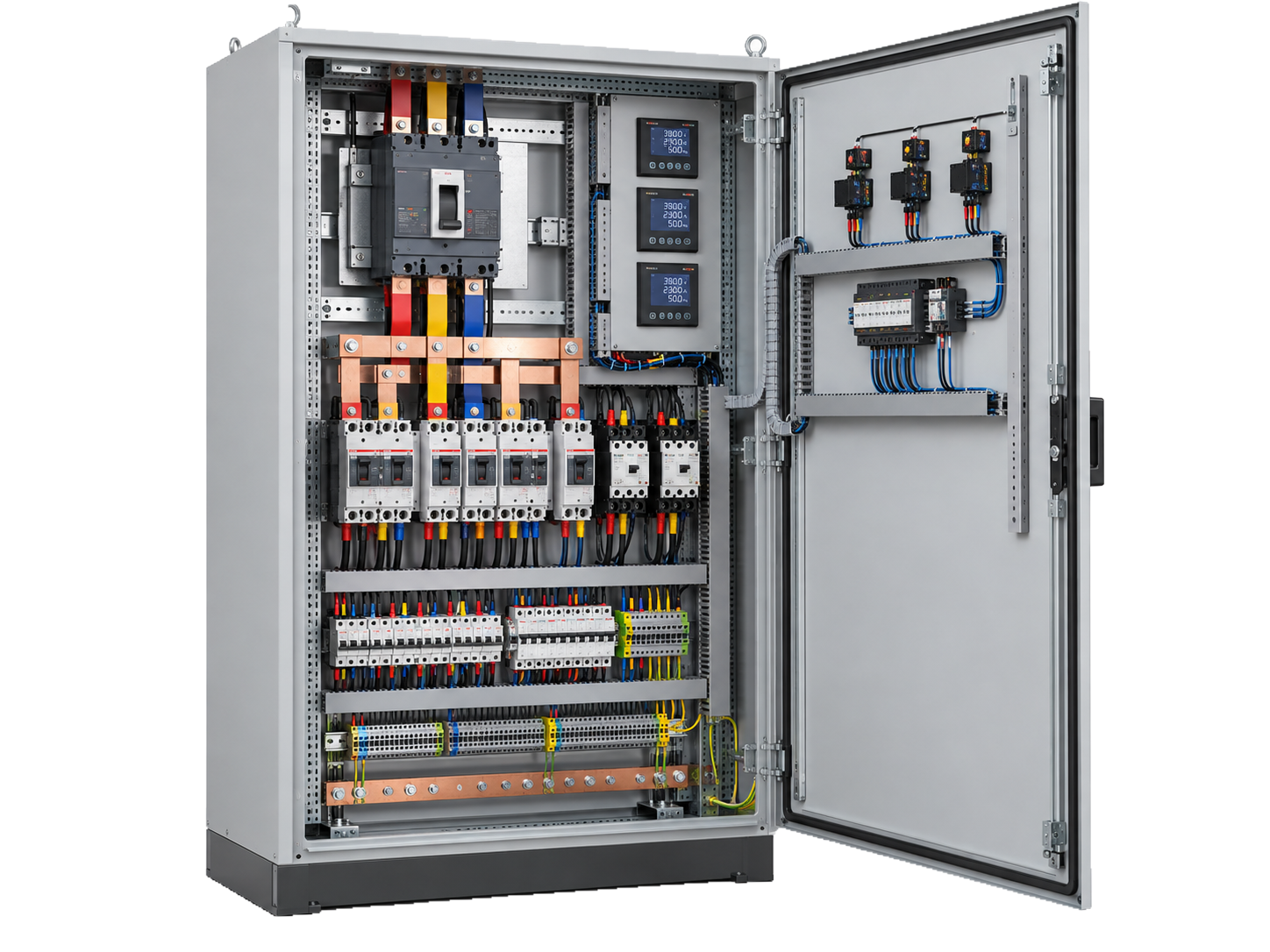
An industrial system solution configured to project conditions for critical-power applications.
According to the projectProduct details →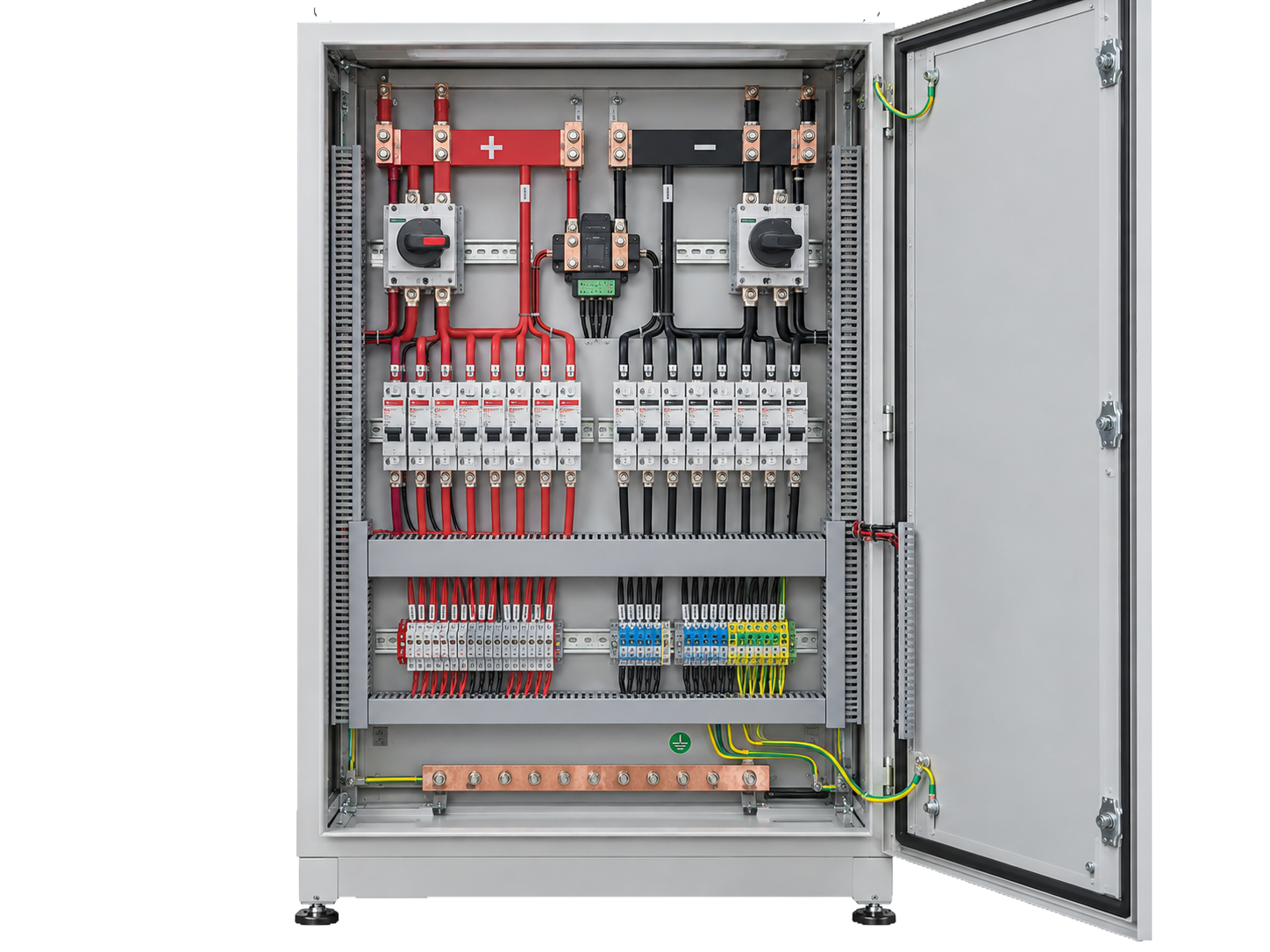
An industrial system solution configured to project conditions for critical-power applications.
24–220 VDCProduct details →PRODUCT AND TECHNOLOGY
A panel system providing safe, selective, measurable and monitored distribution from AC and DC sources to critical loads, combining protection, transfer, isolation and maintenance functions according to the project.
Mains, UPS, generator, rectifier and battery sources connect to suitable AC/DC buses through main protection and isolation devices. Outputs are protected according to the loads, while measurements and alarms are provided to operations.
Breakers, bus connections, insulation, thermal condition, measurement accuracy and transfer logic are checked periodically. Calculations are updated when loads or sources change.
APPLICATIONS
TYPICAL OPTIONS
Values and options are for initial selection. Final values are determined after the selected product, manufacturer data, specification and site conditions have been verified.
SYSTEM ARCHITECTURE
PROJECT INPUTS
Unknown values can be clarified through site inspection and engineering before quotation.
Nominal and maximum AC/DC voltages
Source contributions to short-circuit current
Load list, diversity and starting/switching currents
Bypass, transfer, selectivity and spare-output allowance
Form, IP rating, cable entry and maintenance conditions
TECHNICAL QUESTIONS
Yes. Sources, loads, monitoring and maintenance can be designed within a shared project scope, provided protection devices and operating rules are verified separately.
Only a device explicitly approved by its manufacturer for the DC voltage, pole arrangement and breaking capacity may be used.
Separate or sectionalised distribution is preferred in many projects to support critical-load selectivity, maintenance bypass and operating safety.