ENERGO · PRODUCT DETAILS

Energo ENR-RM-48-60-1M Modular Telecom Rectifier

Single-module 48 V DC, 60 A-class rectifier with 3 kW module power, an Enetek ETR+3048 module and optional SMU01 intelligent control.

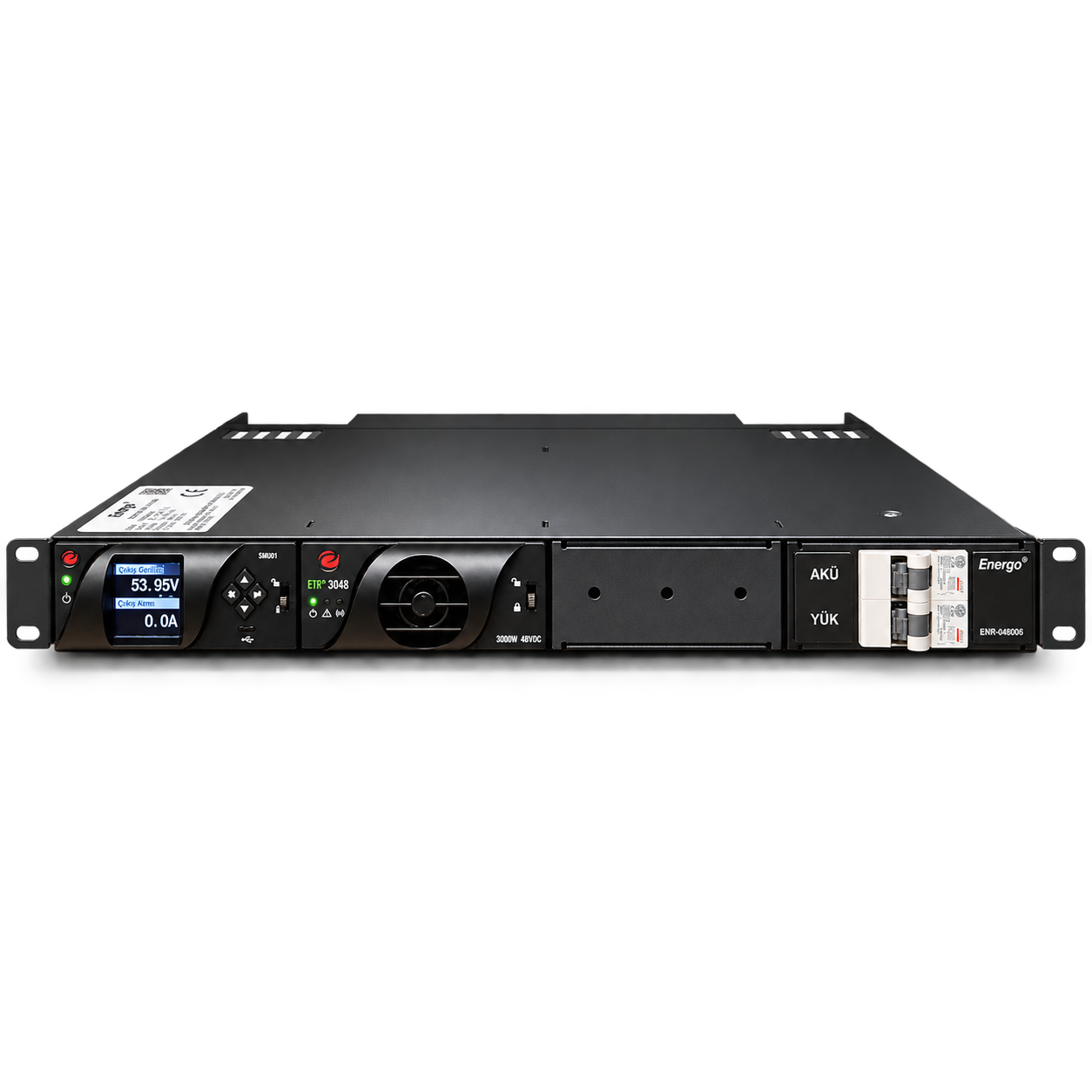
Energo ENR-RM-48-60-1M Modular Telecom Rectifier product image

Technical specifications

ParameterValue / conditions
BrandEnergo
System modelENR-RM-48-60-1M
Nominal output48 V DC
Current class60 A
Power moduleEnetek ETR+3048; manufacturer code 381.040.100
Module count1
Maximum module power3,000 W
Maximum module current62.5 A at 48 V DC under nominal input conditions
Module peak efficiencyAbove 96%
Maximum AC input current18 A RMS at 185 V AC, full load
Power factor≥0.99 at nominal input and at least 50% load
Static voltage regulation≤±0.6%
Dynamic voltage regulation≤±5% for the stated load changes
Output ripple and noise≤150 mVp-p
Module dimensions (W×D×H)108 × 325 × 41 mm
Module weight≤1.7 kg
Module MTBF declarationAbove 300,000 hours at 25°C
Input/output isolation test3 kV AC
RedundancySingle module; no N+1
Central controlConfigurable with SMU01
AC input range85–305 V AC
Nominal AC input185–275 V AC
Input frequency45–66 Hz
Adjustable module output43–58 V DC
Default module output53.5 V DC
CoolingFan-cooled, front-to-rear airflow
Module operating temperature-40°C to +75°C; derating above +55°C

Product description

SMU01 configurations provide local LCD control, module monitoring, automatic float/boost charging and temperature compensation. USB, RS485, Modbus TCP/IP, SNMP and HTTP/SSL access are supported by the controller. Battery testing, connection monitoring and low-voltage disconnection depend on the installed sensors and external hardware. Removing the only module stops rectifier power production; continuity during servicing requires suitable battery support or another power source.

The controller coordinates load supply and battery charging on the same DC bus. Continuous load and battery recharge current must be assessed together; the current rating is not available separately to both. Charging voltage and current limits must match the battery chemistry, cell count and manufacturer instructions. Hot-swap servicing requires suitable rack hardware and safe operating procedures.

Applications

  • Telecommunications and remote communication sites
  • Industrial DC control and automation
  • Power generation, substation communication and telemetry
  • Battery-backed DC systems with compatible voltage and charging requirements

Product photos